

Questions
- Does your document need copyediting or proofreading before it is finalised?
- Have you made style decisions for consistency of spelling, grammar and punctuation?
- If your document has been written by multiple authors, does it have a shared style and approach?
What is copyediting?
Often people ask for a draft text to be proofread when they want a detailed assessment of language, consistency, grammar and punctuation. As proofreading was traditionally the final stage of the publishing process – when the type had been set – the options for change were limited. It is more likely that it is the earlier stage of copyediting they are seeking.
The copyeditor follows a house style or custom style sheet to make the content (text, references, illustrations, etc.) clear and consistent throughout, correcting errors in grammar, spelling, vocabulary and punctuation while using templates, codes or formatting to make the document ready for typesetting or uploading. Depending on the quality and completeness of the original, copyediting may include some queries, rewording, rewriting, restructuring or research (e.g. fact checking).
Chartered Institute of Editing and Proofreading glossary of editorial and publishing terms
Copyediting works with draft text at sentence level and (in agreement with the client) can include:
- checking for spelling, punctuation and grammar errors
- ensuring consistency throughout the text – capitalisation, terminology, tense, tone and language – and identifying contradictions
- applying a house style or agreeing text specific style choices
- making suggestions to improve flow, readability and clarity
- rewording text to clarify meaning, adjusting sentence and paragraph structure
- highlighting factual inaccuracies, potential legal issues or missing information
- examining whether material and language are appropriate for the intended readership
- checking that references apply the required system and are accurate and consistent.
As author requirements vary, my support can be adapted, e,g, to offer a hybrid proofedit. This is for an almost finalised text that needs greater intervention than a proofread would allow, e.g. unedited text set within a PDF or text that is written and will remain within a Word document..
Some editors define copyediting as the more technical aspect of editing and offer a separate line editing service that looks at the sentence-level style of wording. My service incorporates both elements, although I can give one aspect a greater focus, as requested.
My editorial experience
I have over 25 years of experience in editing – copyediting, proofediting and proofreading – non-fiction texts using UK English. This means that I can adapt my approach to suit the tone and purpose of your document and increase its chances of success.
My work has included bids/grant applications, project technical and evaluation reports, academic books, research articles/papers and deliverables, case studies, business reports, newsletters, guides, brochures and web content.
I have worked with many multi-author texts, often written in a second language, and brought clarity and consistency to the final versions.
To complement my experience, I have completed Chartered Institute of Editing and Proofreading (CIEP) copyediting courses.
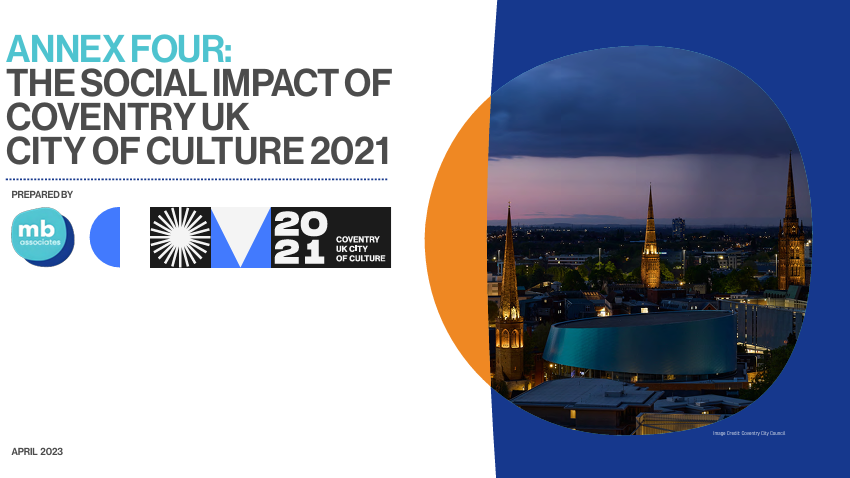
I aligned the style of case studies written by different authors and added context to aid readers
Congratulations, Tim! On behalf of many of us, non-native English speakers, who could benefit from your excellent editing and proofreading work.
Jaroslav Ira, Assistant Professor, Charles University (commenting in response to me becoming a CIEP Advanced Professional Member)
Case studies
The featured case studies include examples of my copyediting for European Commission funded research projects and UK City of Culture 2021 evaluation reports.
Great to work with you Tim! I’m not sure whether you saw our focus study academic paper was published recently. Thank you for your support with it. I really appreciated your attention to detail.
Professor Oyinlola Oyebode, Queen Mary University (formerly University of Warwick). Lead author of the UK City of Culture 2021 volunteering, wellbeing and civic pride focus study report.
How I can help
I recognise that you have spent time and effort to consider your words. I also know that it can be difficult to review your own text when you are so close to it: you know what you intended to say, but you can’t always see errors.
At this stage, a new perspective can help to reassure you and offer suggestions and options.
Initial discussion
We can start with a free 30-minute exploratory call to get to know each other, discuss your requirements and the help that I can offer.
You can tell me about your document – its length, content (references, tables, art works), format, style guide used (or alternative decisions) and audience, as well as any specific requirements. The next stage is for me to see text from different parts of the document; I can then assess the level of support and time needed for editing.
We can consider the number of rounds of revision you might need, e.g. you might revise the returned text and then ask me to review it again. Following our discussion, we can agree responsibilities, the level of intervention, timeline and cost to form a written brief.
If your text isn’t ready for copyediting and needs to consider bigger picture issues before being finalised, I could undertake a developmental edit first.
Sample copyedit
We may decide that the best way to start is with a sample edit. This would give us a deeper understanding of each other’s work and help us to decide what we do next.
For longer texts, I can edit a sample of approximately 2,500 words and then provide a short report. I will usually charge £70 for editing this sample. This amount will be deducted from the total if you ask me to edit the complete text.
Edit and return
Once you have sent me the files (usually in Word), I will confirm receipt and that I can access everything. I will review the document line-by-line and keep you informed of progress and/or any issues that may arise.
I will aim to return the work by the agreed date. This will comprise an edited version of the document using tracked changes, a stylesheet and a report, including any queries that I might raise for you to consider.
The stylesheet is used to record editorial decisions taken – spelling, capitalisation and word choice – that are specific to your text and can be helpful when you make further revisions or work on related documents.
We could add another call when the text is returned to discuss my suggestions.
You will then have the choice on how you implement any ideas and recommendations.
If I discover that the brief doesn’t fully cover the work needed, I will contact you immediately to discuss options.
Support options
Our initial meeting will inform my approach to copyediting, proofediting or proofreading your work. The reasons that some texts require more time include:
- a document written by multiple authors that needs styles aligned
- text written in an author’s second language that needs polishing
- an academic paper requiring references to be checked
- the inclusion of a high number of art works, tables or figures that need to be accurate
- time needed to fact-check statements.
We might agree, as part of the copyediting remit, that I should write linking text or additional sentences to improve readability. (Fellow editor Hazel Bird outlines this type of builder-writing support.)
In other cases, the text may need a substantial edit to clarify points and bring the level of language up to the quality of the content.
I also have experience of writing additional text and can offer that service, as required.
Cost of copyediting
The cost of the work will depend on factors that include the stage of the text’s development, timescales and the best editorial option for you. There is no standard price, but before starting we will agree the brief for the work to be done and a related fee.
My hourly rate is guided by the minimum recommendations made by the Chartered Institute of Editing and Proofreading.
- For copyediting (from 1 March 2026) this is £37.11 per hour.
- For more substantial editing or rewriting text the rate is £42.66 per hour.
- The proofreading rate is £31.92 per hour.
CIEP professional practice code
I am committed to the CIEP’s Membership Codes, including its Professional Practice Code.