

Tentative beginnings
As an introvert, the idea of standing up and speaking during the early years of my career was something to be avoided. I couldn’t think of anything worse.
As time went by, my confidence grew and I took on project management roles that required me to lead meetings, present to colleagues and also speak externally.
I vividly remember standing in front of a group of workers who were about to be made redundant from Peugeot’s Ryton plant and providing an outline of the regional LGV driver training programme that we were coordinating.
At the end of the e-learning content creation project, I gave a presentation to funders and interested stakeholders in teacher training, as well as at a commercial launch event. What I remember most is that having walked into the building focused on the content, I walked out with the realisation that the project was over and that I no longer had a job.
Speaking at European research project events
Managing three European research projects required greater prominence, as I presented to partners and guided them through the complexities of European Commission funded programmes. It was important that I provided clear information to initiate action and get the required responses.
As the projects progressed, I also participated in public events, including:
- being a panel member at the final RICHES conference in Amsterdam.
- organising and hosting the Europeana Space Intellectual Property workshop in Coventry (see the photograph on my Home page)
- standing in the Games pilot coordinator by speaking at the:
- organised and co-hosted the Coventry based creativity and entrepreneurship REACH workshop.
I was to have taken a more significant role in 2020 by hosting the morning session and leading a discussion of REACH project results at the final conference in Pisa. Unfortunately, the arrival of COVID-19 led to the event’s cancellation.
Returning to public speaking
For the past few years I have invested my time and effort in setting up and developing my editing business and not been required to speak – an exception being my organisation of and delivery of the Coventry Cultural Challenge in 2022.
Although I was focused on what I wanted to achieve, I felt that there was something missing.
Chartered Institute of Editing and Proofreading conference
The CIEP invited speakers to deliver lightening talks on ‘How I handled…’ at its 2026 conference. Although I could have saved myself the anxiety and had an enjoyable day, I felt the pull to speak and an opportunity to share my experience with my community that I couldn’t resist – I covered how I handled editing content that I disagreed with.
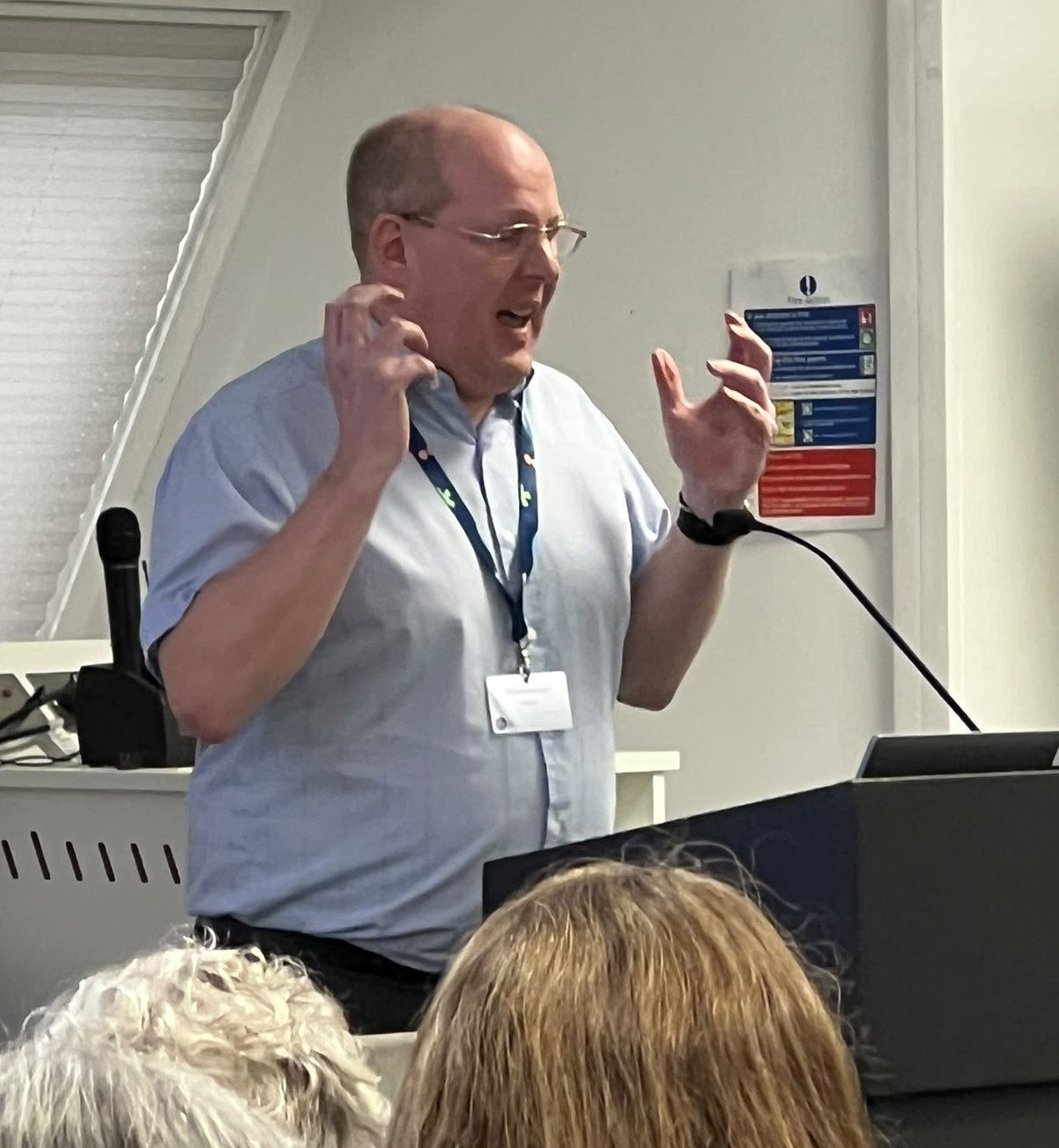
In hindsight it seems like a stupid idea to walk up to a podium, face a room full of people and speak for ten minutes without slides or notes. It just felt right to stand, speak and connect with the people in the room. (It was well rehearsed and I could have given the same presentation again in my sleep.)
What was amazing was the reaction from the audience; they laughed with me, felt my uncertainty, held their breath and let out a collective sigh of relief. I have never felt such a wave of emotional engagement.
What I wasn’t expecting was the reaction and the number of people who approached me afterwards, both at the venue and on online. This confirmed that I was right to give the presentation; I am glad that others found it useful.
It is always strange to note patterns in life, as this presentation was made in the same room as my e-learning content creation presentation all those years before. It was as if the universe was encouraging me to speak more often.
Coventry Writers’ Hub
I met Jo Roberts, the former Coventry Poet Laureate, at the first Coventry Literary festival and after a great conversation about writing she asked whether I would speak about editing to the Coventry Writers’ Hub.
The session took place in early October. As the co-coordinator of the Chartered Institute of Editing and Proofreading Warwickshire/Coventry local group, I invited fellow editor Rowena Ockenden to join me. We had a wonderful wide-ranging ninety-minute discussion with the group.
I spoke about the author–editor relationship, the editorial landscape (including the role of the CIEP), how to find a trusted editor/proofreader and the different levels of editing. Rowena then outlined the end-to-end process of an editorial job, including using a style guide and building a stylesheet, the process of querying and the importance of keeping the reader in mind.
It was clear that much of this was new information to many attendees who were discovering the editorial process and the supportive role that editors and proofreaders can play. We answered as many questions as we could in a vibrant session that only ended because we ran out of time.
We received a lovely email from Jo afterwards that thanked us for an enjoyable session and mentioned the positive feedback that she had received from her group members. It was lovely to talk knowledgeably and passionately about the editorial profession.
Earthen Lamp
In early November I met with the team from Earthen Lamp to help them enhance their reporting.
Earthen Lamp is an organisation that works across the creative sector providing market research and feasibility studies, evaluation, impact assessments and strategy development support. Their clients are local authorities, heritage and cultural bodies contributing to their development, tourism, business partnership and regeneration priorities.
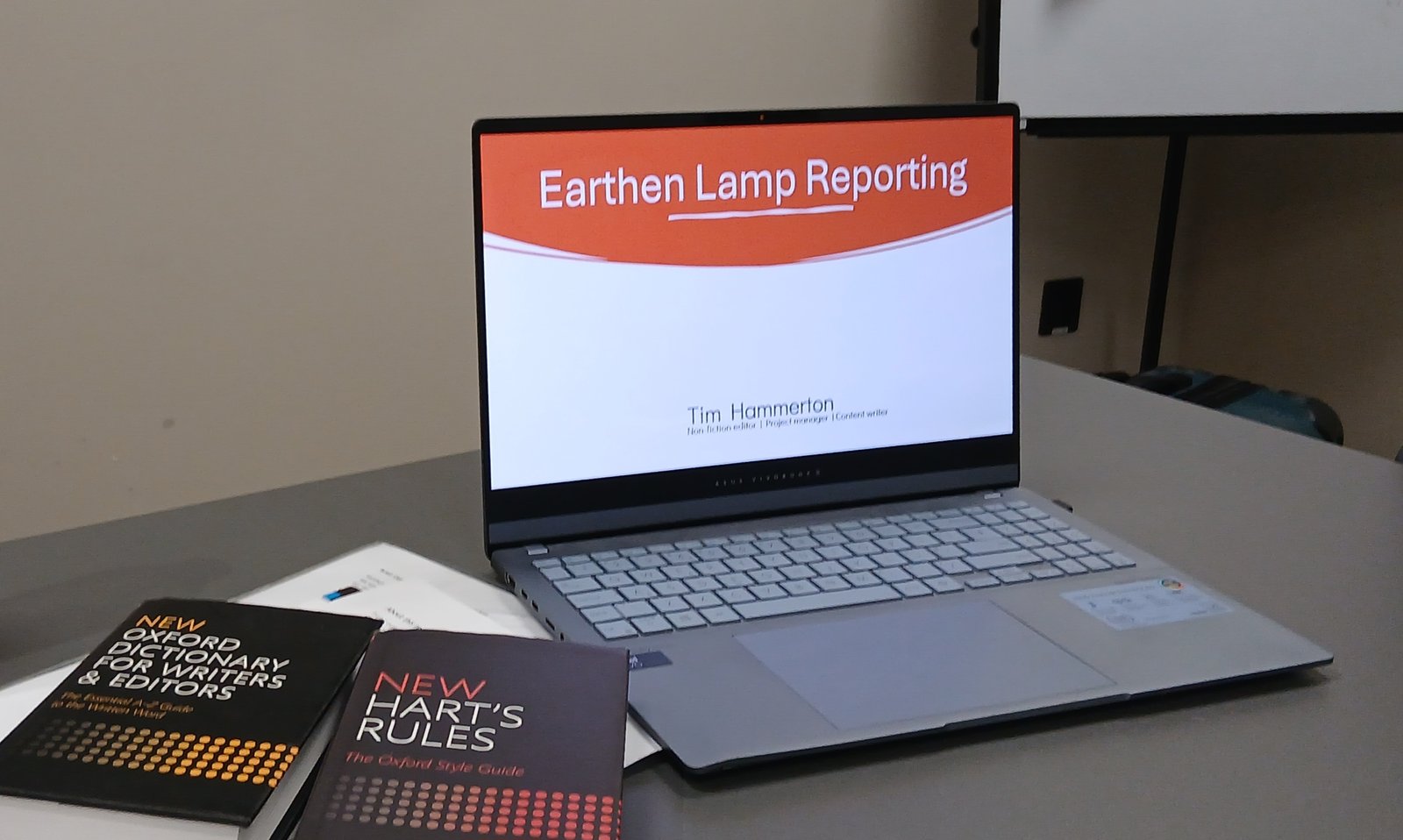
Ahead of the session they sent five reports to me that they had been sent to stakeholders in the past few years – their research and evaluation is excellent, as they capture so many details that can help organisations to reflect upon their activities.
The question that they posed was how to present the sheer quantity of data in their reports without overwhelming their customers and obscuring key findings.
As an experienced developmental editor I was able to assess what was working and what could be done differently. The challenge, as always, was to provide a positive and constructive report that highlighted things for them to consider.
During the meeting we talked through issues and approaches, and looked at ways to present information that could prioritise messaging for a reader (or the stakeholder) using the data to support their observations and recommendations.
What next?
Having not spoken publicly very often since the pandemic, I have had a burst of recent events. It has been great to speak to the editing community, writers and an organisation that prepares reports to help them understand editing and consider their own practices.
If you would like me to speak at an event or help your organisation, I would be delighted to hear from you.