

Reflecting on project success
Looking back over 20 years of project management experience I can identify several reasons for my projects’ success. This includes my style and approach to managing partners and information, and my editorial control of research deliverables.
Project management experience
My management roles sprang initially from projects I had won when writing bids/tenders for an FE college. Some projects were small and community focused, whereas others were large and politically significant. These included the MG Rover/supply chain (£1.3 million) and Peugeot Ryton plant (£3 million) redundancy retraining recovery packages.
Over seven and a half years, I managed three European Commission funded partnership research projects on behalf of Coventry University.
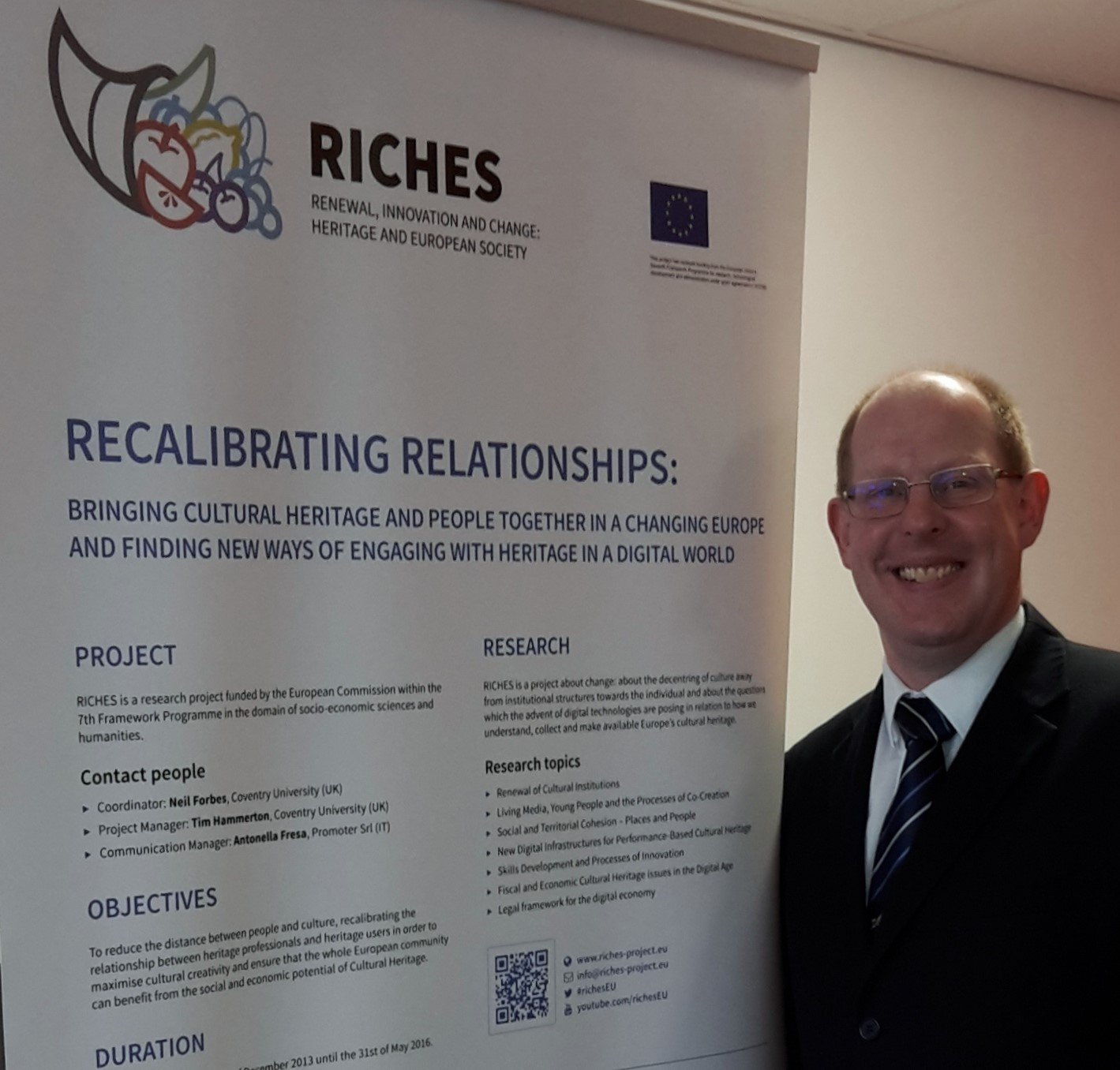
These cultural heritage partnership research projects were RICHES (€3 million), Europeana Space (€5 million) and REACH (€1.5 million) – with 10, 29 and 7 European partners respectively. All were highly regarded, with Europeana Space considered ‘Excellent: having exceeded expectations’ during its final review.
Reasons for managing successfully
Three reasons for the successful management of these projects were:
- building strong relationships with partners
- thoroughly understanding funding/contractual requirements
- collecting detailed financial and progress information on a regular basis.
My relationships with project partners were important, as I was able to guide them through the complexity of project requirements, identify risks and implement solutions. During breaks in partner meetings and events, I made time to speak to everyone, to find out how work was progressing, offer support and advice, and influence activity.
I understood detailed grant agreement that outlined funder rules and regulations, project tasks, and associated reporting and financial requirements – partners often teased me that I could quote page and section numbers. This knowledge was vital for planning and decision making.
I regularly collected delivery and financial information from partners to build a project-wide picture, link tasks, anticipate change and balance the budget. This enabled me to write comprehensive technical reports and public-facing summaries that detailed activity, results and recommendations.
Projects’ editorial requirements
Each project followed a detailed description of activity that outlined tasks, areas of partner cooperation and the titles of deliverables that would describe activities undertaken and share findings.
Project submitted around 25 deliverables – ranging between 5,000 and 70,000 words, with an average of 21,500. Some were written by a single partner, but many were collaborative, with case studies and content that needed a conclusion to draw arguments together.
The challenge was to maintain consistency and accommodate contributions from multiple authors, while avoiding clashes of writing style, format and tone that would make reading and understanding difficult.
Although templates were issued to provide guidance on headings and prompts for common sections, some authors chose their own approaches.
Successful approach
The solution was for me to sit at the centre of this process and quality assure content. I therefore shared themes between partners, identified results and ensured that project requirements were addressed.
I edited multiple iterations of deliverables – seeing at least two versions of many and up to five where authors needed greater support. This included providing developmental feedback to improve content, clarity and flow, as well as to align varied writing styles.
As English was not the first language of many authors, I provided support – that could involve a structural copyedit or a substantial line-by-line edit – to prepare deliverables for publication.
This approach worked well, as the European Commission regularly commented on the quality of the projects’ deliverables.
Technical review
At the end of each reporting period, we attended an annual technical review with the Commission’s project officer and appointed experts to present details of our work for scrutiny.
All of my technical reviews went well; our success was due to thorough preparation.
I wrote a detailed progress report to explain what had been done. This was necessary to frame the narrative for the project officer and experts who were not part of the project bubble.
It was important that all work package leaders knew what the report said and aligned their presentations with it and each other. We therefore met for a rehearsal to get everything right the day before attending the Commission.
Despite our best plans, we had to be nimble. There were always challenging questions and we had to have information to hand to answer with sufficient detail and confidence.
A positive memory is from after the Europeana Space project had ended. We outlined our results, outputs and legacy, and following consideration, the project was judged to be ‘excellent, having exceeded expectations’.